DEEPEN Diverse Approaches to Deepening Inquiry
From developing independent learning skills at university, to gaining insights and personal growth in diverse and multicultural environments, broadening perspectives through overseas research, and discovering the excitement of academic seminars, students deepen their inquiry and progress step by step through a variety of approaches.
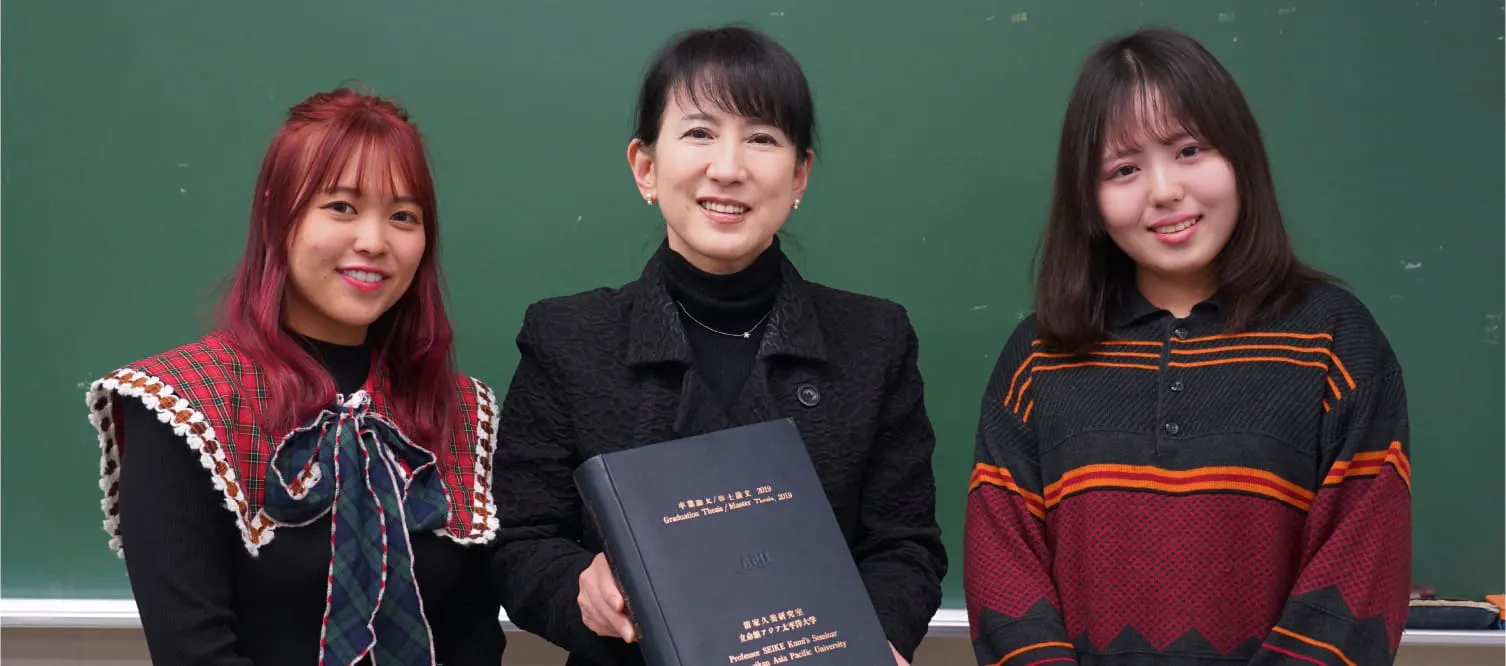
INTERVIEW.04 deepen research : Seminars and Graduation Thesis
-
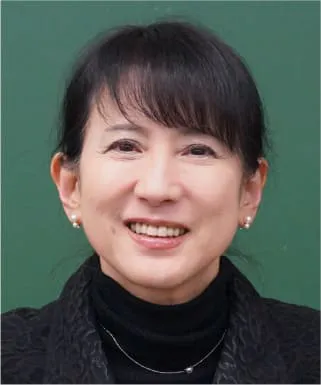
College of Asia Pacific Studies
Professor Kumi Seike
-

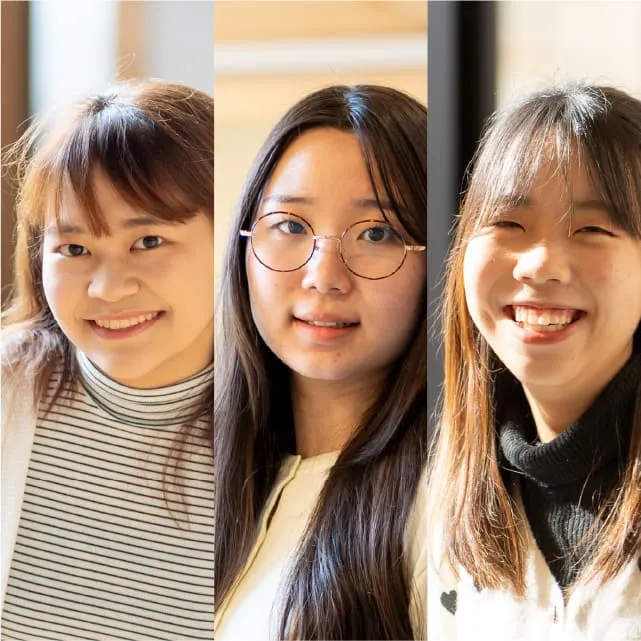
Fourth-year student, College of Asia Pacific Studies – Seike Seminar
Miku Fukui
Research Theme: Sociology of Education (Teacher Education Studies)
-
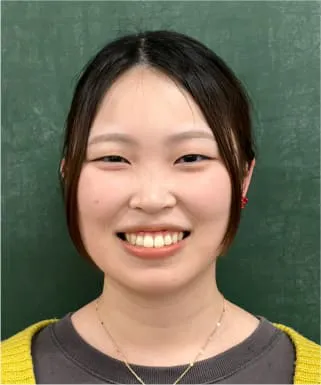
Fourth-year student, College of Asia Pacific Studies – Seike Seminar
Chihiro Morohashi
Research Theme: Political Philosophy (A Study of John Rawls’s Thought)
-

Third-year student, College of Asia Pacific Studies – Seike Seminar
Rei Funakoshi
Research Theme: Sociology of Social Issues (Support for School Refusal / Non-attendance)
What kind of research is conducted in the Seike Seminar?
Prof. Seike:
At the College of Asia Pacific Studies, the curriculum is built on three main pillars: Culture, Society, and Media (Sociology); International Relations (Political Science); and Global Economics (Economics). After studying all three fields, students identify their own research topics and pursue them for their graduation thesis. In our seminar, students work across a wide range of disciplines, including sociology—which allows for broad coverage—as well as cultural anthropology, political philosophy, philosophy, and intellectual history. The themes of their graduation theses are highly diverse. This is because, rather than following instructions from the instructor, students are encouraged to discover and define the topics they truly want to research themselves. Since the starting point is placed on independence and initiative, their research themes naturally reflect a wide variety of interests and curiosities.
What is the significance of third-year and fourth-year students learning together over a two-year period?
Prof. Seike:
Universities are places for independent learning, so rather than passively absorbing what instructors teach, I believe it is a more effective approach for students to advance their own research topics while learning how to conduct research by observing their professors and senior students who are ahead of them. In doing so, students naturally transcend year-level boundaries, forming multiple “learning communities” where they take initiative—organizing reading groups, exchanging ideas, and genuinely inspiring one another. This collaborative environment leads to even greater learning outcomes.
Could you tell us about each student’s graduation thesis research theme? Also, please describe the content of their theses and provide your evaluation of the students.
M.Fukui:
My research theme is teacher education. I grew up closely observing my parents, who are both teachers, and during the COVID-19 pandemic, when I was unable to attend university, I provided student support at elementary and junior high schools. Through interacting with teachers in those settings, I began to think about how to improve learning for future generations of children. As times continue to change rapidly, I felt that reforms are also necessary for teachers. From a philosophical perspective, I proposed a model that clarifies the perspectives and roles required of teachers in the future, establishes a foundation of their essential nature, and enables the reconstruction and updating of their values.
Prof. Seike:
It was an exceptionally substantial study that offered policy recommendations on how to address the many challenges facing Japan’s education system, incorporating insights from educational philosophy and history. Going forward, I expect that Fukui will pursue graduate studies and, in time, take on a role where she can influence and reform education in Japan, perhaps even making policy proposals to institutions such as the Ministry of Education. Fukui is also a student who excels at explaining things clearly. She demonstrates strong leadership by being attentive to those around her and creating a positive atmosphere. Despite still being an undergraduate, her educational abilities are already remarkably high. I was particularly impressed that she successfully guided more than ten second-year students and helped them complete their papers. Wherever she is, she naturally becomes a central presence who brightens the entire group. She is also a fun and lively presence even at social gatherings, so we will certainly miss her when she graduates from the seminar.
C.Morohashi:
I studied political philosophy based on the works of the American philosopher John Rawls. Unlike political science, which analyzes actual social and political phenomena, political philosophy theoretically reflects on past events and explores future policies and the ideal form of society. I chose to study political philosophy because, while learning subjects such as international relations at APU, I began to question how values such as the sanctity of human life, human rights, and morality are often treated as just one element within the balance of political power.
Prof. Seike:
Your study abroad experience seems to have shifted your research focus, didn’t it?
C.Morohashi:
Yes. At first, I began my research with Rawls’s well-known work A Theory of Justice, but in the end I focused on his later work, Political Liberalism. During my study abroad, I thoroughly studied philosophy and Western thought, and came to realize that there are still many topics and variations within political philosophy.
Prof. Seike:
Determining what should serve as the foundation for politics amid diverse values is a global issue. In a situation where no clear resolution has yet been reached, this thesis explores the possibility of achieving a “peaceful” society by examining what justice means, and develops a precise and well-structured argument grounded in Rawls’s philosophy. Morohashi plans to pursue graduate studies, so I expect that she will continue to deepen this challenging research. In the seminar, she is an exceptionally talented student who consistently offers sharp and insightful comments on other students’ presentations. On a personal level, she is cheerful, genuine, and approachable, making her someone whom everyone finds easy to connect with.
R.Funakoshi:
I chose to focus my research on support for school non-attendance because I myself experienced it. After attending a correspondence high school, I went on to enroll at APU, where I was deeply inspired by Professor Seike, who clearly enjoys research more than anyone else. Motivated by the dedication of senior students, I decided to join this seminar. What led me to pursue this research was a sense of unease about the current state of support for students who do not attend school, based on my own experiences. Through analyzing data from the Ministry of Education and conducting field research at places such as free schools, I have worked to identify the issues, and I hope to propose better approaches for support in the future.
Prof. Seike:
Since Funakoshi is a third-year student, her graduation thesis is still ahead of her, but I am always impressed by how much progress she makes with each presentation. In sociology, there is an important perspective that values “being an involved party.” There are things one can understand precisely because of personal experience, and it is also essential to go beyond theoretical discussions and learn directly from the field. She has the initiative and practical skills to travel as far as Hokkaido for her research, and she is a student who is constantly engaged in learning. She is also highly admired by her juniors. It already seems as though she has reached a level of thinking comparable to that of a graduate student, and I look forward to seeing her continued growth.
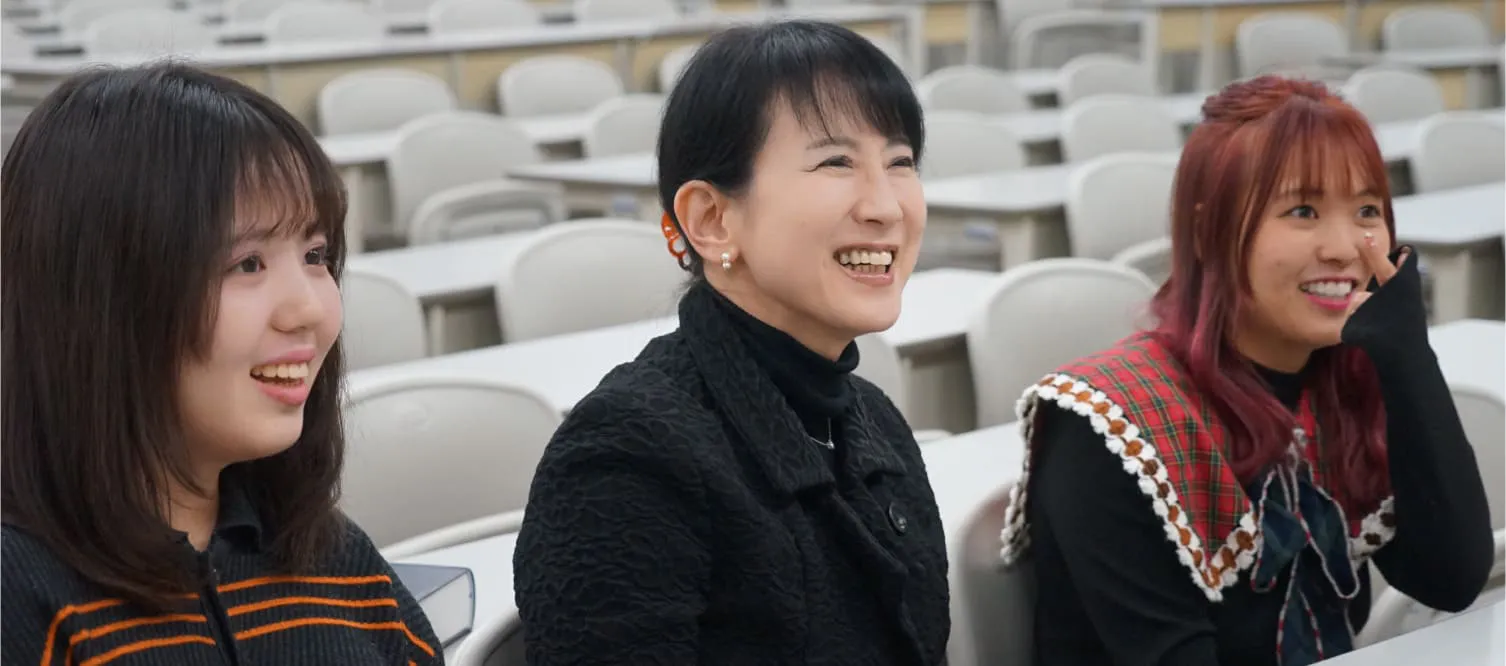
What are the impressions of Professor Seike from the perspective of the three students?
M.Fukui:
All of the students truly love Professor Seike! She always gives us positive feedback and has supported me in developing my abilities by embracing my own ideas of what I want to do, even though I am not well suited to a score-focused society. Having a professor right in front of me who is more passionate about research than anyone and who continues to learn constantly is genuinely a privilege. I deeply admire her and aspire to become like her. She also embodies the model of the “ideal teacher” in my own research theme. The reason I am now considering going on to graduate school—something I had never even imagined during high school—is largely because of the profound influence she has had on my interests, curiosities, and sense of direction.
C.Morohashi:
Professor Seike is a very warm and supportive mentor. Even for students like me who attend seminars remotely, she provides individualized guidance so that each of us can continue making progress toward our graduation theses. I really appreciate that she recognizes and respects different ways of learning, creating an environment where we can study freely and comfortably under any circumstances. At the same time, she is the most disciplined and dedicated of all, truly leading by example. Even when students give presentations that they feel reflect their best effort, she carefully acknowledges their work while also offering insights such as, “Could you develop it further in this way?” Through this, we are able to experience the joy of learning without limits.
R.Funakoshi:
I often talk with other students in the seminar about how Professor Seike is both an outstanding researcher and an exceptional educator. When I watch her lectures and academic presentations, she always seems to enjoy discussing her field of study more than anyone else, which has left a strong impression on me since I first enrolled and continues to inspire my respect. Listening to her, not only is the content fascinating, but I also feel motivated to delve deeper into my own research. It reminds me to stay committed and not lose sight of my current passion. Over the past year in the seminar, I have discovered many aspects of the joy of research. Although each presentation sometimes makes me lose confidence in myself, Professor Seike’s warm and encouraging words always give me strength.
What would Professor Seike like to convey to her students?
Prof. Seike:
APU is a university where students can energetically pursue what they truly want to do. The Dutch philosopher Spinoza once said, “Joy is an essential human emotion. It arises in the process by which a person more fully develops their power of activity and vitality.” His ethical principle can be summed up in one idea: “Increase your power of activity and vitality—that is, act in such a way that you can experience your ‘joy’ to the fullest.” While there are many different ways of thinking, this forms the foundation of my approach to education.
However, in order to reach genuine joy and fulfillment, one must experience hardship and setbacks, and develop the resilience and strength to overcome them with flexibility. During your university years, I encourage you to actively choose challenges that may seem difficult and to embrace those struggles. Furthermore, if you do not blame setbacks on external factors but instead take full responsibility for them, your perspective on the world will ultimately change.
At APU, where diversity is deeply rooted, working hard is never considered embarrassing, and no one will criticize you for wholeheartedly pursuing what you love. By the time students graduate, they have developed a strong inner core and set of values, which are cultivated through academic study. Surrounded by diverse perspectives in an environment that allows you to be your true self, I hope you will look forward to your student life at APU.