
DEEPEN Diverse Approaches to Deepening Inquiry
From developing independent learning skills at university, to gaining insights and personal growth in diverse and multicultural environments, broadening perspectives through overseas research, and discovering the excitement of academic seminars, students deepen their inquiry and progress step by step through a variety of approaches.
INTERVIEW.03 Field Research Abroad: Global Research Program
-
College of Sustainability and Tourism
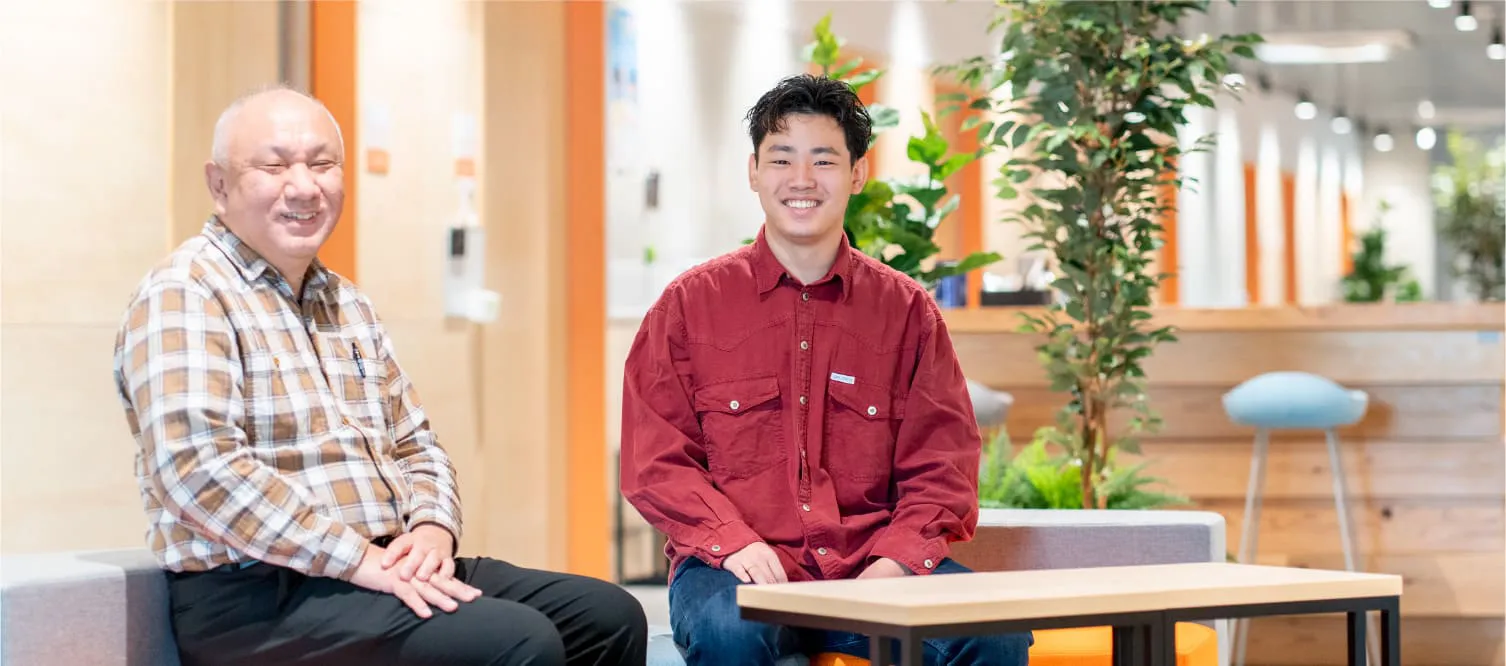
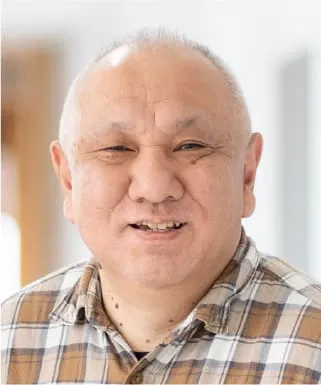
Professor Hiroshi Todoroki
After graduating from the Department of Geography, Faculty of Letters at Ritsumeikan University, he completed his master’s and doctoral programs in geography at the Graduate School of Social Sciences, Seoul National University. In April 2023, he was appointed as a Professor in the College of Sustainability and Tourism.
After graduating from the Department of Geography, Faculty of Letters at Ritsumeikan University, he completed his master’s and doctoral programs in geography at the Graduate School of Social Sciences, Seoul National University. In April 2023, he was appointed as a Professor in the College of Sustainability and Tourism.
-

Third-year student, College of Asia Pacific Studies
Yuzuki Minami
Participated in the APU Global Research Program in Jeju Island, South Korea. Fluent in English and Indonesian, and aspires to develop a business based in Indonesia in the future.
Participated in the APU Global Research Program in Jeju Island, South Korea. Fluent in English and Indonesian, and aspires to develop a business based in Indonesia in the future.
What are the key features of the APU Global Research Program (hereafter referred to as AGR)? Also, could you tell us about the program conducted in South Korea in the Fall Semester of 2023?
Prof. Todoroki:
This is an interdisciplinary and cross-regional program that allows students to thoroughly explore and practically learn about research topics that reflect their own interests and concerns. It was established to support upper-year students who have completed their first-year education in further deepening their inquiries and enhancing their specialization in preparation for their graduation theses. The program offers a variety of field research destinations. In this case, South Korea, where Minami participated, is selected as a research site every year. This is partly because I specialize in Korean studies, and also because many students are interested in Korea. In addition, there are many Korea-related student clubs at APU, and the largest number of international students come from South Korea, which may also make it feel more familiar and accessible to students.
Y.Minami:
After graduation, I hope to pursue higher education at a university overseas. As a first step toward learning how to conduct research in an international context, I participated in the AGR program in South Korea. The research topics covered a wide range of fields, including Korean history, geography, society, politics, and culture. Our group focused on the haenyeo (female divers) of Jeju Island. We were particularly interested in South Korea’s low total fertility rate—defined as the sum of age-specific birth rates for women aged 15 to 49. By examining this issue, I wanted to explore related challenges by linking women’s issues with the history of the haenyeo and the changes in their social status over time.
Prof. Todoroki:
Each class session consists of a lecture and a workshop. Beginning with methods of literature research, how to formulate research questions and hypotheses, and how to gain insights, we proceed to setting research themes, creating fieldwork plans, and making the necessary arrangements. At the end of the program, we present our research results at a joint presentation session and submit a report. A distinctive feature of this program is that the only fixed element is the destination (in this case, South Korea); otherwise, it is designed so that students take full initiative, think independently, and freely customize the program throughout.
Y.Minami:
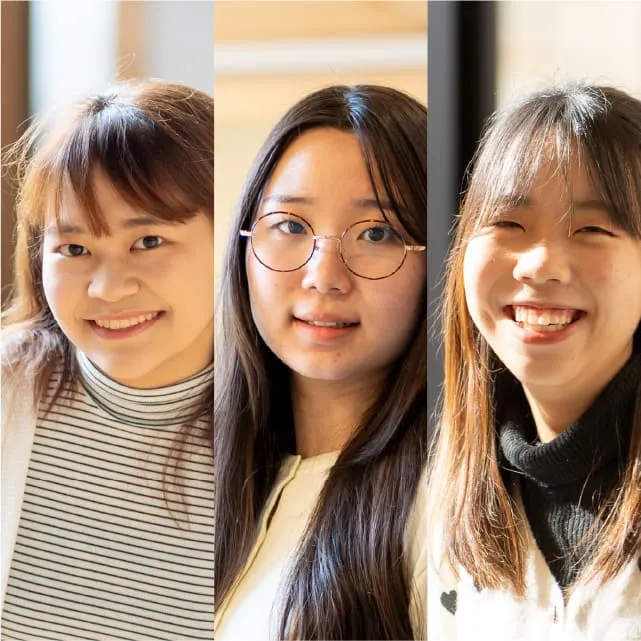
Our team consisted of three members—myself and two other female students—and each of us had strong opinions. We often engaged in intense discussions and sometimes even had conflicts, but interestingly, we naturally managed to come together in the end. Along the way, I realized something quite fascinating: each of us had our own strengths and weaknesses. Some of us took on leadership roles, others were good at conveying information logically, and others excelled at writing. By naturally dividing these roles among ourselves, we were able to maintain a good balance within the team.
Prof. Todoroki:
I got the impression that Mr. Minami’s group really enjoys research. It wasn’t just about learning research methods—their passion for their interests, as well as their sense of excitement and curiosity, came across very clearly. They were always eager to say, “I want to try this!” in a positive way. I felt reassured that they were making good use of what they had learned in the program. They truly moved forward toward a single goal, even while engaging in lively and intense discussions.
Y.Minami:
During the five-day fieldwork in Jeju Island, what was most challenging, most rewarding, and most memorable was the same thing: the three of us held discussions almost every night until late. As we continued our research and investigation, we realized that the culture of the haenyeo, which is closely tied to history, was far deeper than we had imagined. This led us to change our perspective on culture itself—we came to understand that no culture is ever superficial.
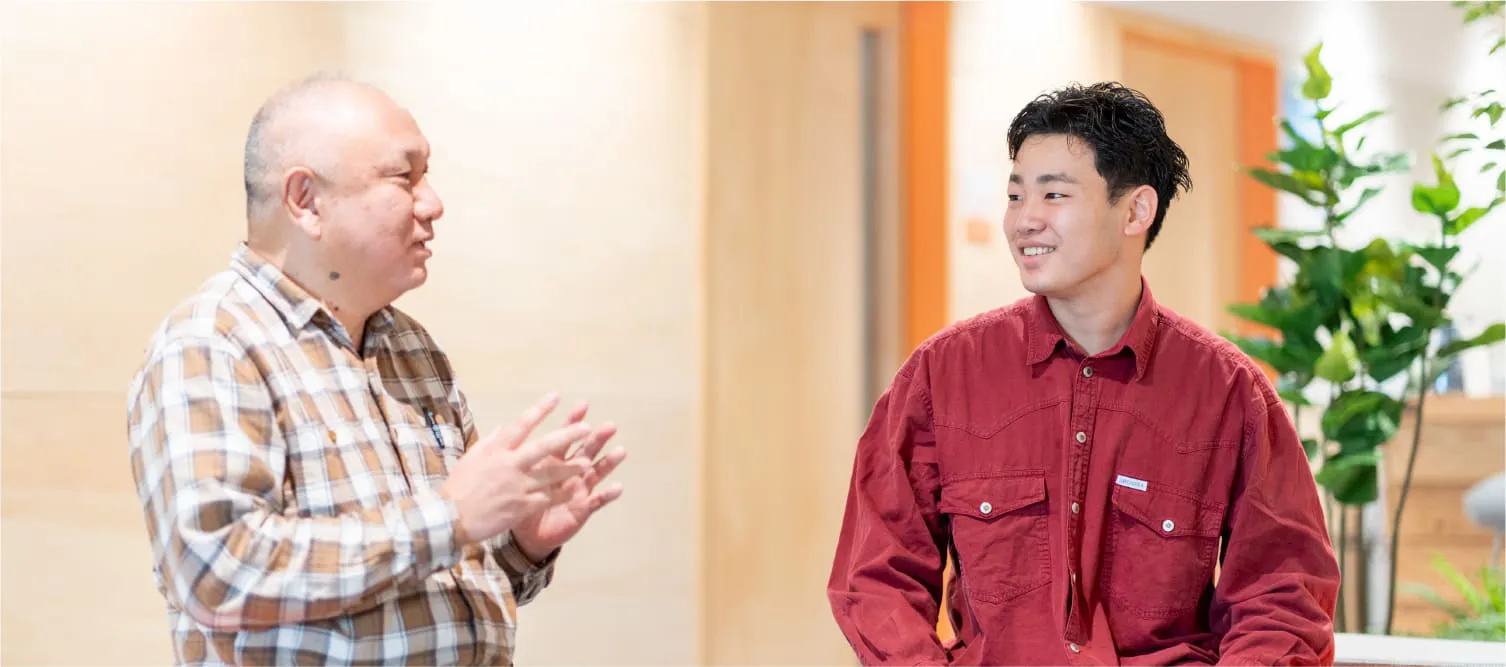
What are your impressions of each other, Professor Todoroki and Mr. Minami? Also, as someone who teaches and someone who learns, are there any things you keep in mind?
Prof. Todoroki:
At APU, our role is to provide the infrastructure that supports students’ learning. We prepare the minimum essential tools—such as methods for interviews and surveys, as well as approaches to analysis—but, so to speak, we only hand them a hammer and a saw. How they shape their work is entirely up to them. We value the idea that students should create the work they truly want to make. Mr. Minami is one of the students who makes effective use of this infrastructure. He also serves as the leader of a Yosakoi dance club, and I believe he is able to stay active and engaged in his own way.
Y.Minami:
Professor Todoroki is very approachable, and even in large lecture classes, he creates opportunities for interactive exchanges by encouraging students to speak. Simply learning theories in a one-way manner makes it difficult to retain them, and sometimes it is hard to recall them when actually needed. However, classes that incorporate both input and output are truly useful in practice. I also appreciate how he kindly offers advice on recommended classes and seminars, as well as guidance about APU and future career paths.
Prof. Todoroki:
Since AGR is designed for students who have already acquired the basics of research and theory, there are motivated students like Mr. Minami and his peers who take initiative and move forward actively. On the other hand, there are also groups who struggle, unsure of what they should do—or even what they do not understand. In such cases, we provide hints or show examples from senior students, but unless absolutely necessary, we do not intervene to correct their course. Instead, we support them in a way that allows them to exercise their own initiative and pursue their work as they wish.
Y.Minami:
APU is a university where students often formulate their own questions, gain insights, and output what they have researched. In particular, learning experiences like AGR would not be enjoyable as an academic pursuit if students were simply given a topic and told what to do. I believe it is also difficult to achieve meaningful results unless students think and act on their own. That said, not everyone is able to do this from the beginning; rather, it is an environment where students can grow by being influenced and stimulated by the university, professors, and the friends around them.

What aspects do each of you find appealing about APU, including AGR?
Prof. Todoroki:
What’s important is that there is a foundation where students can discover what gives their life meaning—not only through studying, but also by immersing themselves in research, dedicating themselves to club activities, working as teaching assistants who support classes, or serving as resident assistants who help fellow students in the dorms. What I want to tell students is: “Use APU as a stepping stone.” I have about 200 graduates from my seminar, and each of them is pursuing a completely different path. Among them are a manager of a sushi chain restaurant, someone who built the first AEON Mall in Cambodia, a politician, and even a mercenary. What they all have in common is that they passionately pursued what they wanted to do and made the most of the opportunities and infrastructure APU provided.
Y.Minami:
I serve as the representative of the Yosakoi dance club “APU Yossha Koi,” and we dedicate ourselves to practice as we are invited to perform at competitions, local festivals, and even corporate events. What I always keep in mind is creating a balanced environment without any sense of unfairness, so that everyone can simply enjoy themselves. At APU, where there are many international students, even everyday interactions are global in nature. In the future, I dream of moving to Indonesia—a country with a large population, youthfulness, and strong momentum—and developing my business from there. I believe that APU is also a place where you can build friendships that will connect you worldwide, both in your personal life and in business.
Prof. Todoroki:
The friends you form close bonds with during your university years tend to remain strong and lasting even as you grow older. At APU, not only the faculty and staff, but also the campus itself, the local community, and the entire Asia-Pacific region serve as your learning environment. So please use it as a stepping stone—through trial and error, identify what you truly need. By doing so, your future path will gradually become clear. Another important point is that it is no coincidence that APU is located in Beppu, Kyushu. This place is becoming a hub that connects the world. Beppu is a city that welcomes people and ideas from outside, making it easy to organize extracurricular learning opportunities, and the local community offers a wide range of support and opportunities. I hope you will also build a strong connection with this city.