DEEPEN Diverse Approaches to Deepening Inquiry
From developing independent learning skills at university, to gaining insights and personal growth in diverse and multicultural environments, broadening perspectives through overseas research, and discovering the excitement of academic seminars, students deepen their inquiry and progress step by step through a variety of approaches.
INTERVIEW.01 Questioning Values: A Multicultural Cooperative Workshop
What is the Multicultural Cooperative Workshop (MCW)?
Making the most of a learning environment where students from diverse countries and regions come together, Japanese and international students study in the same classroom with the goal of deepening their understanding of different cultures and values, as well as strengthening交流 between domestic and international students. The program culminates in a presentation competition conducted in both Japanese and English.
-
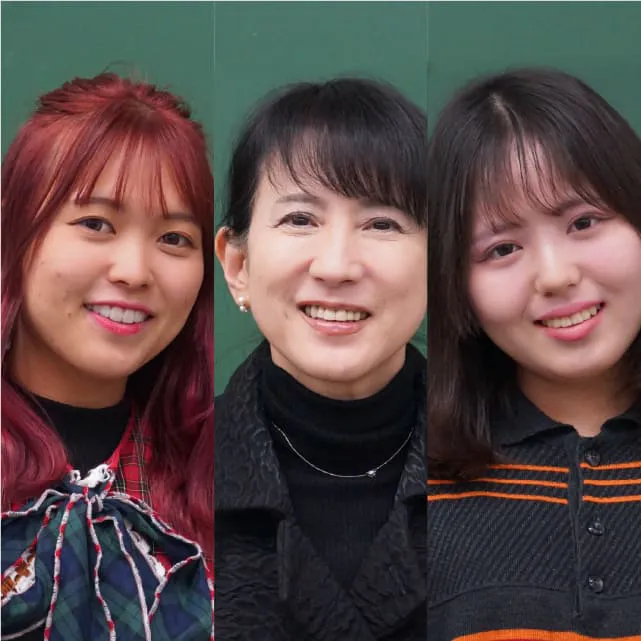
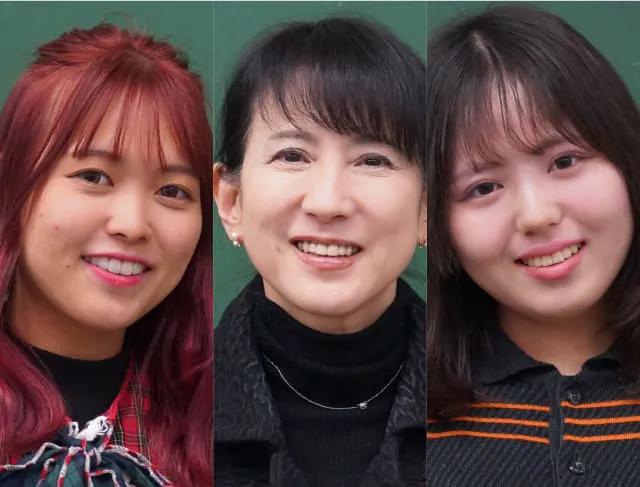
First-year student, College of Sustainability and Tourism
Maho Tsuruta
-

First-year student, College of Asia Pacific Studies
Kaho Shirota
-
First-year student, College of International Management
Rui Sonoda
The Multicultural Cooperative Workshop (MCW) is a required course for first-year students. What were your initial impressions of the course?
R. Sonoda:
I live in a dormitory where there are international students, so I occasionally had simple conversations with them. However, this was my first time taking classes together and interacting more deeply. The classes I had taken before were conducted entirely in Japanese, so I felt a bit anxious about how things would be when English was involved.
M.Tsuruta:
In MCW, each group consists of three domestic students and three international students. From the very beginning, the international students shared their ideas actively in English without hesitation. The other two domestic students were also very proficient in English, so I was doing my best just to keep up.
K.Shirota:
In MCW, we engage in discussions and group work with international students, and at the end, there is a presentation competition where we present a “summer school” plan that we have developed ourselves in English. When I first looked at the syllabus, I felt both excitement and nervousness at the same time.
Did you gain any new insights, broaden your perspectives, or feel a sense of personal growth through your interactions with international students?
K.Shirota:
When we were coming up with ideas for the summer school, Japanese students often tended to focus on nature, whereas the international students in my group emphasized AI, technology, and machinery in their ideas. These were perspectives I hadn’t considered myself, and this experience made me realize that diverse viewpoints can emerge from differences in people’s backgrounds, cultures, and ways of thinking.
M.Tsuruta:
I had also heard that international students tend to work at their own pace, but the international students in my group were actually very fast-paced. Not only did they actively speak up, but they were also quick and efficient in how they carried out tasks and made plans. I found it impressive, and at the same time it had a positive influence on me. Additionally, when I translated assignments written in English by international students into Japanese, I didn’t give up even when I came across difficult expressions. Instead, I kept asking them questions like, “Is this interpretation correct?” I didn’t want to leave anything unresolved, and I was driven by the desire to produce a better assignment. Through this process, our mutual understanding deepened, and it also helped build my confidence.
R. Sonoda:
At first, the language barrier was significant, and there were times when I felt frustrated because I couldn’t fully express what I wanted to say. However, instead of giving up, I made a conscious effort to ask questions and give responses that would help draw out what the other person was trying to say. As a result, they began to explain things more in their own words. This experience taught me that effective communication depends greatly on how you listen and respond. Since active listening is one of the goals of MCW, I believe all three of us were able to improve our skills in this area considerably.
M.Tsuruta:
Speaking of new realizations, roles within the group tend to form naturally. Since I am the type of person who likes to plan ahead and think proactively, I took on responsibilities such as coordinating schedules and checking in with the other members. It was natural that all six of us had different backgrounds and circumstances, and at times it was difficult to gather everyone, or motivation levels would shift. However, since group assignments are meant to be shared equally without placing too much burden on any one person, I felt it was important to bring everyone together and move forward as a cohesive team.
K.Shirota:
I am also the type of person who likes to plan ahead, so I took charge of time management. Over the course of the six months, differences in motivation and values inevitably appeared. However, instead of taking a strong or forceful approach, I tried to communicate my thoughts gently, which helped us build strong teamwork—something I was really happy about. At first, I wasn’t very confident during discussions, but once I realized that there is no absolute right or wrong when it comes to opinions, I stopped hesitating to speak up.
R. Sonoda:
At first, the motivation within our group was very high, but it dropped at one point along the way, and we struggled to bring it back up. However, we were able to overcome this by supporting and encouraging one another, and we became very close as a team. Compared to how I was at the beginning of the course, I feel that I have grown—I’ve become stronger, more flexible, and I’m no longer afraid of using English!
After overcoming many challenges and learning experiences, what kind of “summer school” did your group ultimately create? Also, how did you feel after completing the presentation?
M.Tsuruta:
We designed a five-day program centered in Saiki City, Oita Prefecture, where participants can experience activities such as camping and cooking. The goal is not only to provide hands-on experiences but also to help participants develop communication skills and intercultural understanding that they can apply in their daily lives afterward. The target participants are adults ranging from university students to people in their 30s. One of the key features of the program is that it allows participants to become familiar with interaction and activity environments involving people from diverse cultural and national backgrounds, which are considered “ordinary” for APU students. We also received helpful advice from the TA (student staff who support the class), such as keeping within the time limit, maintaining a good balance among individual speakers, and making the slides clearer. We were able to achieve all of these improvements, and we were thrilled to win first place in the presentation competition!
R. Sonoda:
Our plan is a summer school in Alaska designed for university students. The objective is to help participants overcome internet dependence and experience the power of nature by encountering the aurora and wildlife. The program includes camping and cooking, and as a unique and appealing feature, we incorporated hunting. We placed great importance on making it as realistic and safe as possible—for example, learning how to set traps, capture animals responsibly, and use everything without waste—so that participants can understand the value of life and the cycle of nature. We worked hard together all the way through to the end, so the sense of accomplishment after the presentation was incredible.
K.Shirota:
Our plan is a one-week program set in the mountains of Oita Prefecture, where participants camp while picking up trash and then use what they collect to create unique pieces of art that reflect their individuality. Originally, we planned to build a real treehouse, but we realized it would be difficult. An international student suggested making a miniature version instead, and we decided to adopt that idea, which helped give our project a distinctive feature. As we worked together, the greatest joy for me was feeling that we were truly sharing our opinions and engaging in meaningful discussions as a group. In the presentation, we were honored to receive the top award, and it made me feel that all the effort and thought we put into the project was truly worthwhile.
What makes you feel glad that you chose to enroll at APU?
R. Sonoda:
There are many reasons, but the greatest one is that APU has students from all over the world and from different parts of Japan, allowing me to experience diverse cultures in my everyday life. I find it amazing that you can learn about different countries and regions without actually going there. When I feel unsure or lost, I can gain new insights from a variety of perspectives, which broadens my outlook. I feel that this will help me grow and improve the quality of my life moving forward.
K.Shirota:
I also experienced this in MCW, but both domestic and international students create an atmosphere where they respect and empathize with each other’s opinions. Of course, differing opinions do come up, but things naturally come together and reach a sense of harmony. There are truly diverse people at APU—some have started their own businesses, some have studied abroad, and others, like students from Okinawa, have deep knowledge about topics such as war. We are able to share these valuable experiences and insights in our everyday lives. By enrolling at APU, I feel that I was able to greatly change myself. In high school, I was part of a small community and lacked confidence, but here I’ve been able to grow beyond that.
M.Tsuruta:
Not only are there international students, but there are also students from all over Japan, from Hokkaido to Okinawa. Whatever you want to do or try, no one dismisses your ideas—everyone around you warmly supports and encourages you. The three of us became members of “FLAG,” a student organization that works in cooperation with the university to support new students. We are involved in planning and running orientation programs to welcome incoming students and help ease their expectations and anxieties. The selection process included documents and interviews, but we were able to achieve this goal thanks to the experience and confidence we gained through MCW, as well as the support and encouragement from friends and senior students who kindly helped us along the way.
the Multicultural Cooperative Workshop?