

Discovering What You Love in a Multicultural Environment
APU Student Portfolios
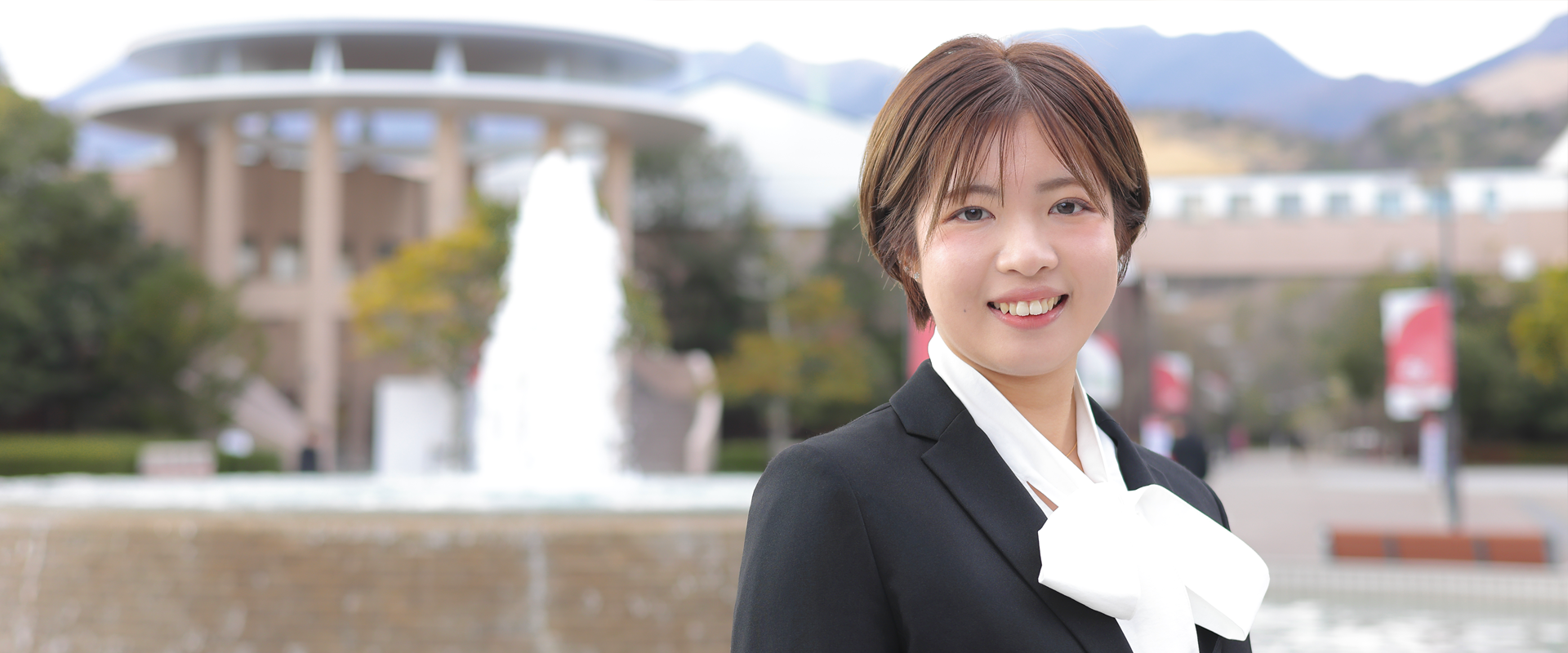
PROFILE
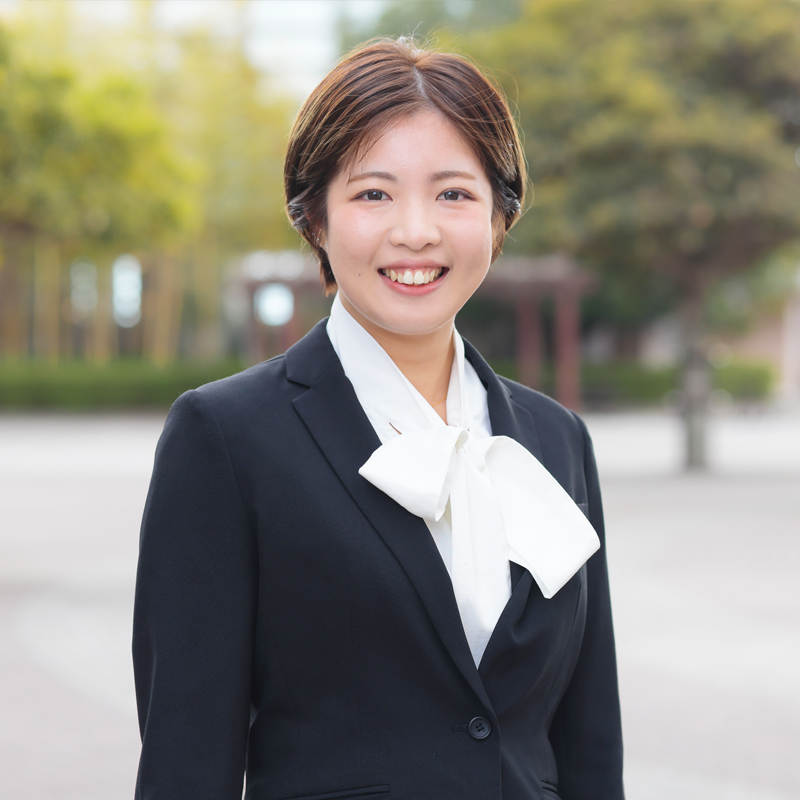
Yui Murakami
*Interview conducted in January 2026.
People can grow positively when they are accepted and encouraged by those around them. I am grateful for the learning environment that boosted my confidence and supported me through every uncertainty and challenge I faced.
JOURNEY
The Journey to Discovering What I Love
-
Grade
7-9 Study Abroad in Australia
Growing Interest in Practical, Real-World English -
Grade
10-12 Entered a high school with a study abroad program in Canada -
Enter APU
APU, Where Individuality Is Respected
The Concept of “Self” -
APU
Year 1 Growing Interest in Gender Issues on a Multicultural Campus -
APU
Year 1 Meeting Professor Kaori Yoshida and Taking Every One of Her Classes -
APU
Year 2 One-Year Exchange Program in the Czech Republic: Living in a Non-English-Speaking Environment -
APU
Year 4 Writing My Thesis Using the Male Gaze Theory
What were you like in high school?
When I was in junior high school, I took part in my first overseas study program in Australia for eight days. That experience inspired me to learn practical English, so I chose a high school that offered a study abroad program in Canada. Although I was not a particularly outgoing person, my classmates approached academics, sports, and school events with enthusiasm. Their positive influence made me more cheerful, and I enjoyed a fun and fulfilling high school life.
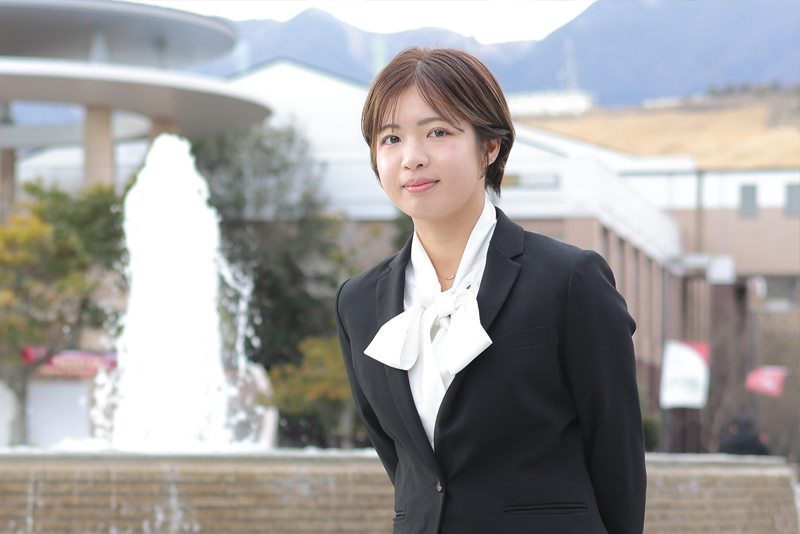
What made you decide to enroll at APU?
Because I felt APU offered an environment where I could truly be myself.
One of my close friends in high school had foreign roots, but she kept that part of her background hidden from others. One day, however, our classmates found out unexpectedly, and I could see the concern on her face. As time went by, she began sharing stories about her culture at home and talking to me about her experiences. Later, I learned through a letter she wrote to me that something I had said had made a difference. When I told her that her cultural background was something wonderful, it made her realize that she did not need to hide it and could be proud of who she was.
This was a very significant experience for me. I was shocked to realize that some people are unable to be themselves, not because of their own choices, but because of the environment around them. While I was naturally attracted to the opportunity to study using English, a subject I had always enjoyed, I was even more drawn to APU's environment, where people from diverse backgrounds can learn together while respecting one another. That is why I strongly wanted to study at APU.
How did you find university learning different from learning in high school?
I found it truly enjoyable to study subjects that genuinely interested me and to immerse myself in learning. In addition, classes at APU were highly interactive, with students actively sharing their opinions. In fact, so many students would raise their hands that discussions often ran longer than planned, and questions sometimes had to be cut off. Because classes offered not only input from professors but also many opportunities to hear diverse perspectives and ideas from fellow students, I thoroughly enjoyed the learning experience.
Did your interests change or expand after enrolling at APU?
APU provided an environment where people could build friendships regardless of nationality, gender, or age, which made me once again appreciate the importance of one's sense of self and individuality. In addition, my interest in gender issues grew during my time at APU. I had always enjoyed watching films and other visual media, but through activities such as film analysis in class, I became aware of how gender roles are often reflected in visual works through directing choices, camera movements, and other cinematic techniques. As I compared my own environment at APU with a society where traditional gender roles are still sometimes imposed, I began to notice a gap between the two. This led me to develop a strong interest in researching gender-related issues in greater depth.
What Was One of the Most Valuable Experiences You Had During Your Time at APU?
I participated in one-month language study programs in both Ireland and South Korea, and later spent a year studying abroad in the Czech Republic as an exchange student starting in the fall of my second year. What impressed me most was the atmosphere at my university in the Czech Republic. The classes were very egalitarian, and students interacted with one another on equal footing, regardless of political or social circumstances. Since Czech is the official language, there were many situations in which English was not widely understood. I also had to handle important matters, such as arranging my dormitory contract, on my own. These experiences taught me to speak up clearly and confidently when something was important.
What Classes or Professors Influenced Your Choice of Undergraduate Thesis Topic?
I took every class taught by Professor Kaori Yoshida, who later became my seminar advisor, from my first year onward. Through her courses, I learned about media from a wide range of perspectives, including Japanese culture, other cultures, and history. Her classes were always engaging, and while she had high expectations of her students, she motivated us to study seriously and think critically. She also provided me with detailed guidance throughout the process of writing my graduation thesis, and I am deeply grateful for all her support.
What did you write your graduation thesis on?
The central question of my thesis was: “Why Was the Television Drama Ossan's Love Accepted by Male Audiences as Well?” To explore this question, I analyzed the series using Male Gaze Theory.
Male Gaze Theory argues that when the perspectives of the protagonist, the camera, and the viewer align, viewers are encouraged to identify with the protagonist and experience the story through that character's eyes. The theory also suggests that female characters are sometimes used as a means of facilitating this identification process.
Even in stories that depict romantic relationships between men, gender roles can still be reflected and reproduced. Drawing on this theory, I examined whether the male gaze operates within works that portray male-male romance. In particular, because Ossan's Love is widely recognized as having gained support from people of all ages and genders, I explored my own perspective on why the series was able to resonate with male audiences as well.
What are your plans after graduation, and what are your goals for the future?
I will be working in the field of video production, creating content that enhances and broadens the creative expression of events and concerts. By making full use of the communication skills, English proficiency, and Korean language abilities I gained at APU, I hope to enjoy my work while continuing to challenge myself and grow.
Do you have a message for prospective students?
When I was in junior high school, I often struggled with interpersonal relationships and disliked how negative I had become. At APU, however, I met many people who valued and appreciated me even more than I valued myself. They constantly encouraged me, praised my efforts, and expressed their gratitude, which helped me build self-confidence and develop a stronger sense of self-worth.
I also believe that it was because of the environment at APU that I learned to express my feelings honestly and openly. Looking back on how much I have grown over the past four years, the message I would like to share is this: don't be afraid to put what you love and what you want to try first, and give it your all. At APU, there are countless opportunities that can serve as the gateway to new challenges and possibilities.