

Discovering What You Love in a Multicultural Environment
APU Student Portfolios

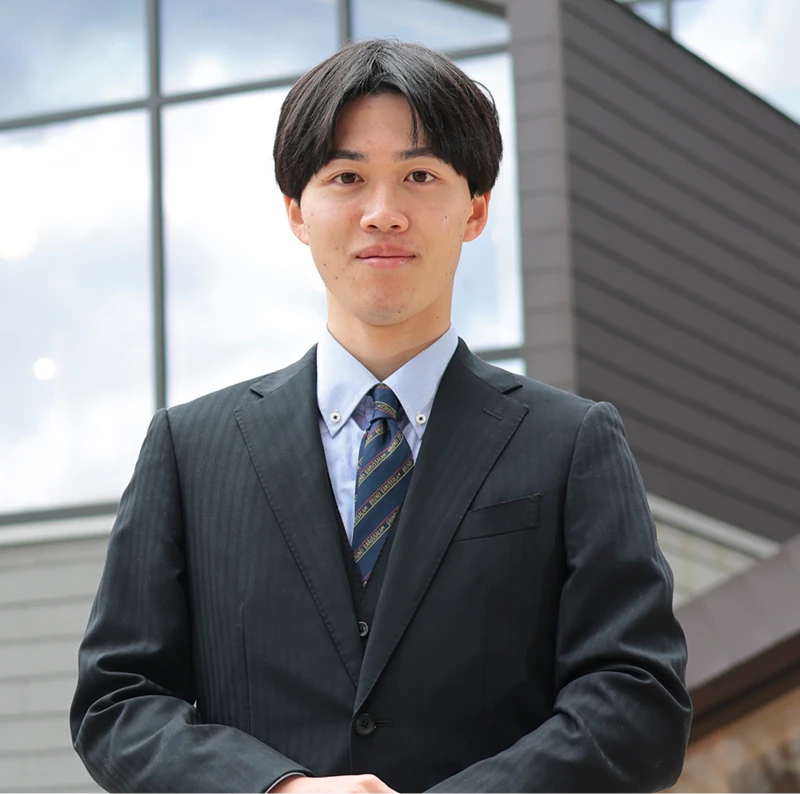
PROFILE
Tomohiro Kono
*Interview conducted in January 2026.
Changing Course from Science and Stepping Excitedly into a New Environment and a World of Discovery.Finding Future Possibilities and Becoming the Person I Never Imagined I Could Be Before Entering APU.
JOURNEY
The Journey to Discovering What I Love
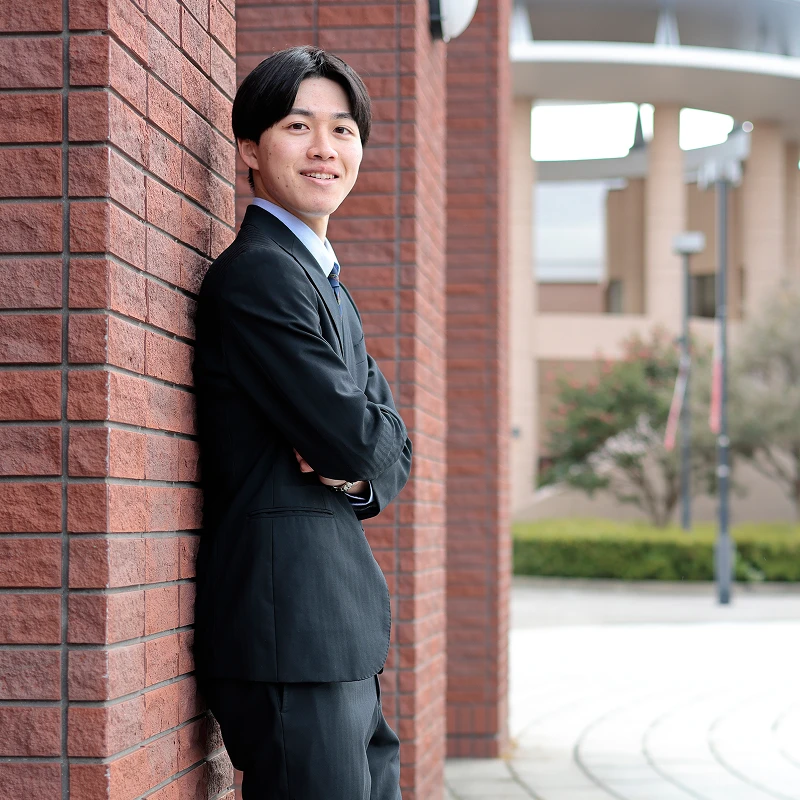
- Child Served as Captain of the High School Soccer Team After Playing Since Elementary School
- JH/HS Interested in Neuroscience, Psychology, and Other Science-Related Fields
- Enter APU Inspired by APU’s Internationality and Diversity and Excited for a New Environment
-
APU
Year 2 International Cooperation Theory Inspires My Choice of Major -
APU
Year 3 Realized the Importance of ODA While Studying Abroad in Taiwan -
Return
to APU Joined Professor Tatsufumi Yamagata’s Seminar -
APU
Year 4 Chose Offer-Type Cooperation as My Thesis Topic
What were you like in high school?
I continued playing soccer, which I had started in elementary school, and served as captain of my high school team. Since my school emphasized both academics and extracurricular activities, I spent my days attending practice, studying at a cram school afterward, and then returning to school the next day. Looking back, I was a diligent and hardworking high school student.
What made you decide to enroll at APU?
One reason was that my father had always enjoyed international exchange, and growing up, we often welcomed people from overseas into our home in a homestay-like setting. Originally, however, I had planned to pursue a science-related field and was particularly interested in subjects such as neuroscience and psychology, which explore the human mind and behavior. When I learned about APU’s international and diverse environment, which goes beyond conventional ideas about academic backgrounds and fields of study, I felt that it offered something unique that other universities could not. The prospect of entering an entirely new environment that could transform my perspective on the world was truly exciting.

How did you find university learning different from learning in high school?
Soon after entering APU, I participated in a project organized by the student organization Academic Camp for first-year students, where we worked together in groups to write a research paper. For a month, we read numerous academic sources and discussed the theme, “Exploring Ways to Achieve Happiness Through the Example of Nordic Lifestyles,” with students from diverse backgrounds. It was an incredibly valuable experience. I was amazed to discover that university learning could extend far beyond regular classes, and I believe this experience became the foundation for the many challenges I later took on at APU.
What was the most memorable class you took after enrolling at APU?
One of the most memorable classes I took was Peace Studies. Based on the theories of Johan Galtung, often referred to as the father of peace studies, we learned about the structure of conflicts and practical approaches to peacebuilding through hands-on exercises and group discussions. Having the opportunity to learn directly from a renowned expert in the field was both a valuable and fascinating experience.
What Challenges Did You Take On During Your Time at APU?
During my third year, I participated in a one-year exchange program in Taiwan. Through fieldwork on islands located on the front line of historical conflicts, where the memories of war remain deeply embedded, I was able to gain a firsthand understanding of the realities of peace and conflict. This experience reaffirmed for me the importance of international cooperation and the need for Official Development Assistance (ODA). I believe this study abroad experience strengthened my conviction in the significance of the research theme I pursue today.
What Classes or Professors Influenced Your Choice of Undergraduate Thesis Topic?
First, in my second year, I took International Cooperation Studies, a course taught by Professor Osamu Hayakawa, who was seconded from Japan’s Ministry of Foreign Affairs. The course covered a wide range of topics, from the history of Japan’s Official Development Assistance (ODA) to recent global affairs, and offered profound insights into international cooperation. It was one of the experiences that inspired me to pursue International Relations as my major and ultimately led me to my undergraduate thesis topic.
Later, I joined the seminar led by Professor Tatsufumi Yamagata, a leading expert in international cooperation and development economics with extensive knowledge and field experience. Through discussions with him about how to connect my various academic interests, I was able to refine and develop a concrete thesis topic.
What did you write your graduation thesis on?
My undergraduate thesis examined “offer-based cooperation,” a new approach to Official Development Assistance (ODA) introduced by the Japanese government in 2023. Under this approach, Japan proactively proposes support initiatives rather than waiting for requests from partner countries. Because this represents a significant shift from the traditional aid model, I analyzed actual cases and explored issues such as whether this approach might be overly influenced by the interests and priorities of donor countries and whether the ownership and autonomy of recipient countries can be maintained. Through this research, I examined both the opportunities and challenges of this new framework for international cooperation.
How do you reflect on your four years at APU?
I had the opportunity to meet and connect with people from a wide variety of backgrounds, regardless of their age, nationality, or circumstances. In particular, I was greatly inspired and supported by a senior student one year ahead of me in Academic Camp, where I served as a leader during my second year. I also formed close friendships with classmates I met at AP House, and we motivated one another through friendly competition and mutual encouragement. They are all people I hope to stay connected with for the rest of my life. My studies, research, friendships, and overall student life were all incredibly rewarding and enjoyable.
What are your plans after graduation, and what are your goals for the future?
I will be pursuing a degree in Public Law and Policy at the Graduate School of Public Policy at Tohoku University, where I will study both the theory and practice of policy analysis, examining the effectiveness and challenges of policies implemented by national and local governments and exploring ways to improve them. By drawing on the international experiences and multifaceted perspectives I gained at APU, I hope to learn from my fellow students, continue growing, and inspire one another through our shared academic journey.
Do you have a message for prospective students?
APU gave me the freedom to explore my interests and provided countless opportunities for new discoveries, greatly expanding my future possibilities. I hope that all of you will make the most of the opportunities available here, develop a clear sense of purpose, and continue to grow in an environment where you can pursue what truly interests you.