

Discovering What You Love in a Multicultural Environment
APU Student Portfolios

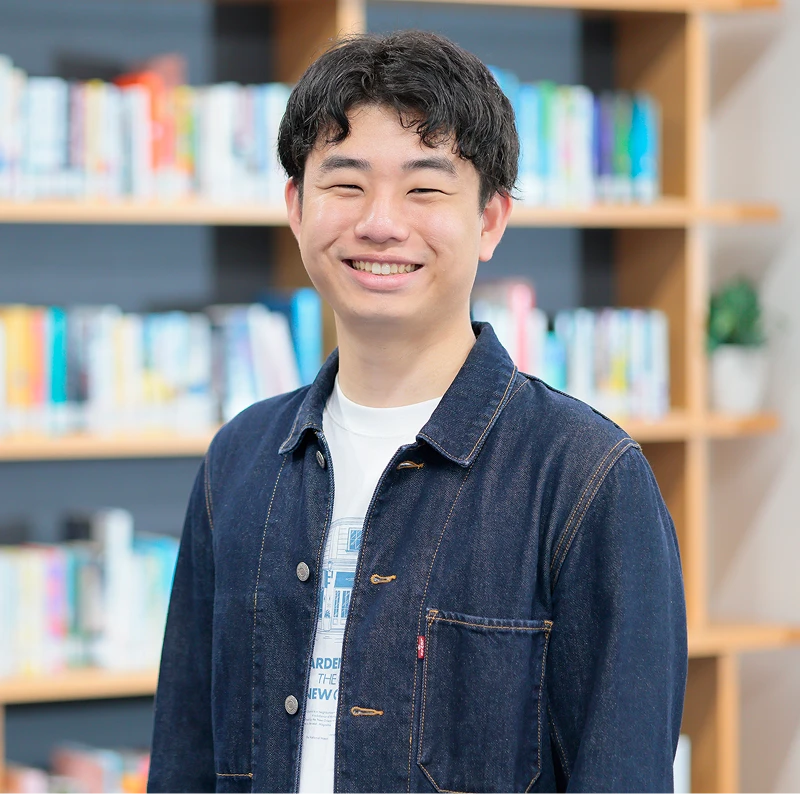
PROFILE
Haruto Kumagai
* At the time of the interview
Building Expertise Through a Passion for English and Learning at University
Aspiring to Promote Solutions to Tourism Challenges
in Regional Communities Through Firsthand Experience
JOURNEY
The Journey to Discovering What I Love
- Child A Longstanding Admiration for English Since Junior High School
-
Grade
7-9 Homestay in Canada and a Growing Interest in Promoting Japan's Tourism -
Enter
APU Interested in Regional Tourism and Chose the College of Sustainability and Tourism -
APU
Year 1 YOUN Seung Ho's “Introduction to Tourism” -
APU
Year 1 MCW (Multicultural Cooperative Workshop) Changed My Perspective -
APU
Year 3 Developing a Strong Interest in Tourism Through My Seminar -
APU
Year 3 Researching Tourism Marketing and Beppu
What were you like in high school?
I had liked English since junior high school and wanted to improve my speaking skills, so I enrolled in a high school with a study abroad program. Despite the challenges of the COVID-19 pandemic, I spent time on a homestay in Toronto, Canada, during my second year of high school. At first, I was disappointed to find that I could not speak English as well as I had hoped. However, after a few months, I became accustomed to life there and made friends. Through talking with them, I realized that many people were still unfamiliar with Japan's attractions. That experience sparked my interest in tourism and made me want to help promote Japan.

What made you decide to enroll at APU?
An advisor from APU's Tokyo Office visited my high school and gave a presentation, and my first impression was that APU seemed like a very interesting university. The College of Sustainability and Tourism had just been established, and I was part of its first cohort. I had already developed an interest in regional tourism, and I felt that APU was the perfect fit for me because it offered an environment where I could learn in a more practical and hands-on way than in a large city.

How did you find university learning different from learning in high school?
The ability to develop expertise in the subjects I want to study from an early stage and create a course schedule tailored to my own interests.
What was the most memorable class you took after enrolling at APU?
The most memorable course for me was “Introduction to Tourism” taught by YOUN Seung Ho. As it was an introductory course, I assumed I had already learned the basics and approached it rather casually. However, I was surprised to find that the course gave us opportunities to visit the city of Beppu and engage with people from the local hot spring community. I believe tourism is a field of study in which new discoveries can be made only by going to a place yourself, so it was an extremely valuable opportunity for me.
Have there been any experiences that broadened your perspective or helped you grow?
One experience that significantly broadened my perspective was MCW (Multicultural Cooperative Workshop), a seminar-style course I took in my first year. In the course, groups of six students, made up of an equal number of Japanese and international students, worked together on a project. As the project progressed, frustrations began to emerge due to a lack of communication, and we sought advice from Professor Shusuke Kanai. He taught us the importance of respecting one another, and by working through our differences together, we were ultimately able to complete the project successfully. It was one of the major turning points that changed my perspective, and it showed me what makes APU unique.
Did you gain any new insights into the relationship between sustainability and tourism?
In the course Introduction to Sustainable Development, I learned about the SDGs from the ground up and came to understand the importance of connecting sustainability, which aims to address environmental and social issues, with tourism, which had previously been my primary perspective. For example, I realized that technologies such as wind power generation could be applied to regions facing electricity shortages and potentially contribute to local promotion and development as well. This was one of the personal insights I gained through the course.
Have you decided on a topic for your graduation thesis?
During my first year, I built a solid foundation in both sustainability and tourism, including environmental issues. In my second year, I explored more specialized topics in both fields, and after joining a seminar in my third year, I decided to focus more deeply on tourism. As part of a seminar project, I conducted field research and developed proposals to help solve some of the challenges facing Kyoto Studio Park, which has experienced a decline in visitors. Being able to put my learning into practice was an invaluable experience, and hearing that several of our ideas were adopted was both encouraging and confidence-building. While I have not yet settled on a graduation thesis topic, I hope to continue researching tourism marketing, with a particular focus on Beppu.
What are your future goals, and how would you like to make use of your experiences at APU?
Since I would like to work in the tourism industry, I am considering a wide range of career options, including travel agencies, airlines, and passenger transportation companies such as railway operators. I hope to identify an organization where I can pursue what I am passionate about and where my skills and experiences will be valued. The tourism theories and practical experience I gained at APU could help me contribute from an early stage in my career. I also hope to draw on my experience working with people from diverse backgrounds, my English proficiency, and my understanding of different cultures and customs to develop practical and effective plans and promotional strategies.
Do you have a message for prospective students?
I think it is important to choose a university with a clear idea of what you want to study and what you want to do. By making those two things the foundation of your university experience and investing time and effort in developing them, you can build skills and knowledge that will be valuable in the future.