



Alumni Profiles
Problem-solving systems that have succeeded in Japan have the power to take the world by storm.
Yusuke Kano
College of Asia Pacific Management (APM, now the Faculty of International Management), Graduated in 2010
Chairman, Japan CareTech Association / Chairman of the Board, Welmo Inc.
Collaborative Researcher, Institute of Gerontology, The University of Tokyo
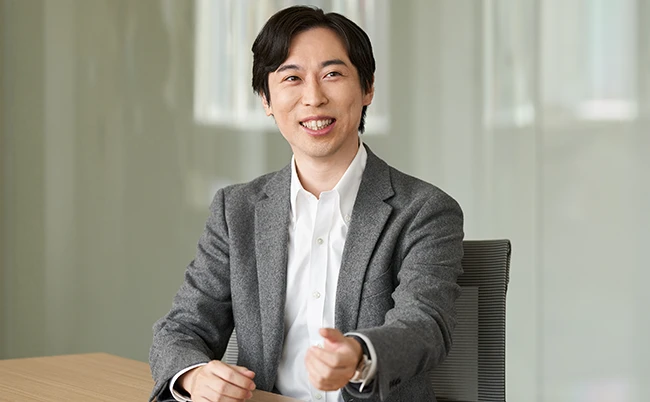
As Japan became the world’s first “super-aging society,” issues such as improving operational efficiency in the long-term care industry, securing human resources, and reforming social security systems have become increasingly urgent. After graduating in 2010 from APU’s College of Asia Pacific Management (now the College of International Management), I worked for about two years at an IT consulting firm. I then founded Welmo with the goal of improving the efficiency and quality of long-term care services through the use of ICT. In 2020, I also established the Japan CareTech Association to promote and advocate for the transformation of the long-term care and welfare sector through technology, while raising awareness of its importance among government bodies, local authorities, and other stakeholders.
My direct motivation for focusing on the long-term care sector came from volunteering at an elderly care facility, where I witnessed the fundamental challenges facing the industry firsthand. At the same time, the importance of “taking initiative,” which I learned during my years at APU, strengthened my determination to pursue entrepreneurship.
The long-term care and welfare sector is a typical labor-intensive industry, where no matter how hard one works, wages often remain unchanged, making it a field with limited incentives.The reason I was able to decide, “Then maybe I can do something about it myself,” was precisely because my experience at APU taught me the importance of acting proactively and independently.
While many Japanese students tended to be somewhat reserved, the international students around me were hungry to act, learn, and voice their opinions. Inspired by their drive and energy, I established an investment circle called APU International Investors, drawing on what I had learned in my finance seminars. We collaborated with the Bank of Japan to develop educational materials and conducted outreach classes at local high schools. With strong support from APU, our activities were highly active, and I still recall receiving an award for excellence in extracurricular activities.
Not only in Japan but also in many European countries, declining birthrates and aging populations are becoming serious social challenges. If we can build a sustainable and effective system for long-term care and welfare in Japan—home to the world’s highest proportion of elderly citizens—this system and know-how could serve as a global model and contribute to the international community.
Many students aspire to work overseas after graduation. While improving language skills is important, what matters most is developing an attitude toward problem-solving that is grounded in a comprehensive understanding of the history, culture, and political circumstances of different countries and regions.
APU offers an environment where students can meet people from around the world and learn firsthand about differing national perspectives and values. Simply studying, graduating, and joining a stable company is far too limiting. I encourage you to carry multiple possibilities and options within yourself, push forward without fear of failure, and pursue a way of life that is truly your own.